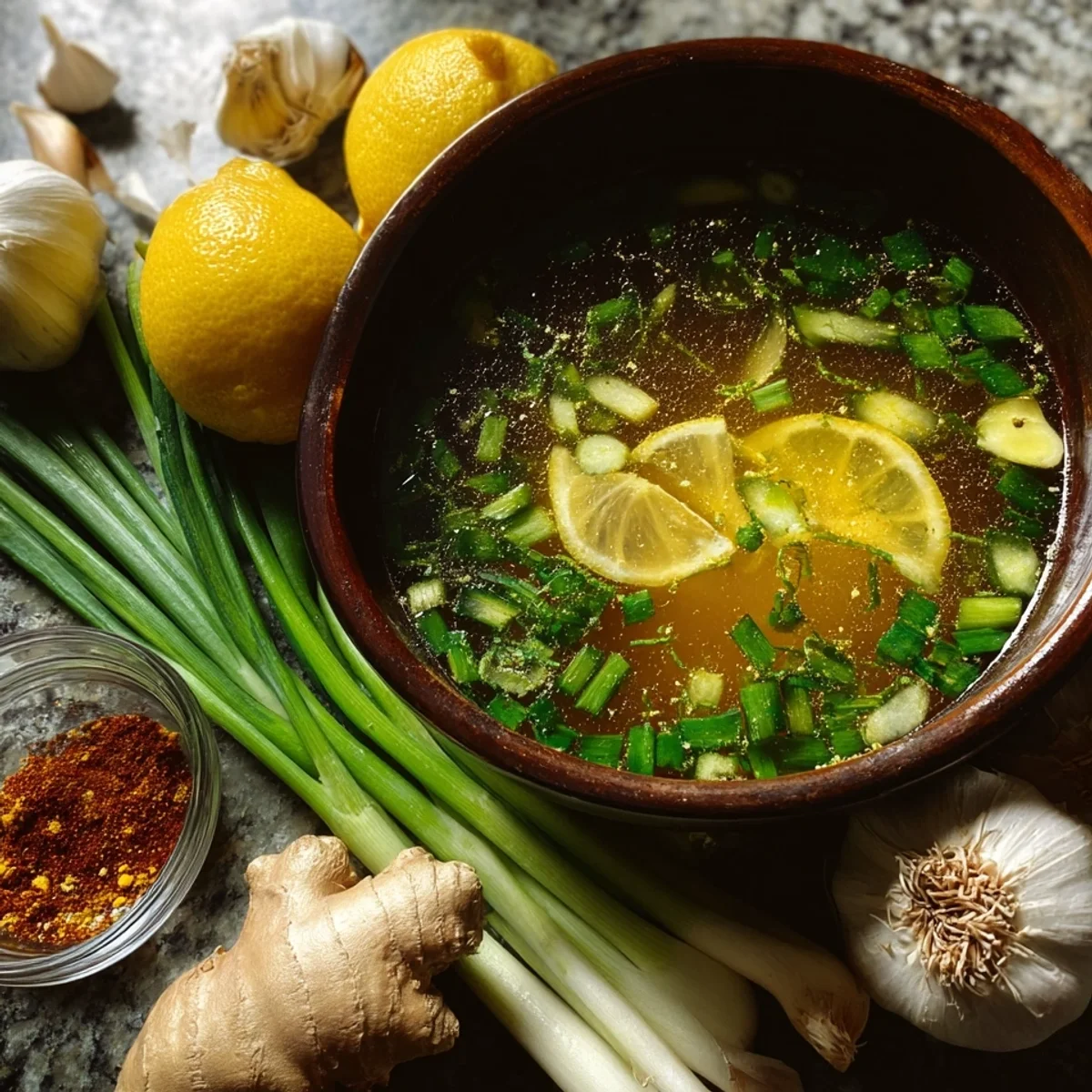


You know those days, right? When you just feel… blah. A few years back, after a particularly rough week, my body was practically begging for something comforting, yet light. I was tired of chicken noodle soup, honestly. That's when I started experimenting, pulling inspiration from my favorite Japanese flavors. I stumbled upon this Miso Ginger Broth, and oh my goodness, it was a game-changer. It’s become my go-to elixir for whenever I need a gentle reset, a hug in a mug, or just a little pick-me-up. Trust me, you're going to love it.
Oh, the first time I made this broth, I was so excited, I totally forgot to strain out the ginger and garlic! I took a big slurp and, well, let's just say a mouthful of chewy ginger isn't quite the 'healing' experience I was going for. Oops! My husband still teases me about my 'chunky detox broth.' Lesson learned: always strain, friends, always!
Ingredients for Your Healing Miso Ginger Broth
- 6 cups Filtered Water: Honestly, water is the unsung hero here. Don't just grab any tap water if you can help it. Filtered water really lets the delicate flavors of your broth shine through without any weird chlorine aftertastes. Think of it as a blank canvas, ready to soak up all that goodness. It makes such a difference in the overall purity and taste, you'll wonder why you ever used anything else!
- 1/4 cup White Miso Paste: This is where the magic happens, hon! White miso paste brings that incredible umami depth and a gentle sweetness to the broth. It's a fermented soybean paste, packed with probiotics so good for your gut! I always keep a tub in my fridge. Just remember, we add it after simmering to preserve those beneficial enzymes. It's the soul of our Miso Ginger Broth, really.
- 1 (4-inch) piece Dried Kombu: Kombu is a dried kelp, and it's essential for that authentic Japanese dashi flavor. It adds a subtle, oceanic umami without making the broth taste 'fishy,' if that makes sense. It’s like a secret ingredient that elevates the whole experience, giving the broth a foundational savory note that you just can't get otherwise. Don't skip it, it's a game-changer for depth!
- 2-inch piece Fresh Ginger, peeled and thinly sliced: Ginger, oh ginger! This root is a powerhouse. It brings that amazing warmth, a little zing, and is fantastic for soothing tummies. I always slice mine thin to maximize the surface area for flavor extraction. There’s nothing quite like that spicy, aromatic kick. It’s a core player in making this broth feel truly healing and vibrant, especially when you're feeling a bit sluggish.
- 3 cloves Garlic, smashed: Smashed garlic adds a gentle, mellow aroma and flavor, not an overpowering bite. Smashing it just breaks it open enough to release those wonderful compounds without making the broth taste too garlicky. It provides another layer of savory depth and, let's be real, garlic just makes everything better, right? It's a quiet contributor to the overall comfort.
- 1 whole Lemon, juiced (plus 2 thin slices for simmering): Lemon is the bright, zesty finish! The slices simmered in the broth add a subtle, aromatic citrus note to the base, while the fresh juice at the end perks everything up. It cuts through the richness, adding a lovely tang and a dose of Vitamin C. It’s that final touch that makes the whole broth sing, making it feel truly fresh and invigorating.
Bringing Your Miso Ginger Broth to Life: The Steps
- Step 1: Simmer Broth Base:
- Alright, let's get this party started! Grab a medium pot and toss in your filtered water, kombu, ginger slices, smashed garlic, turmeric, and black peppercorns. Bring it to a gentle simmer over medium heat. You’ll start to see tiny bubbles forming and those beautiful aromas will begin to fill your kitchen. It’s the foundation for our incredible Miso Ginger Broth, so take a deep breath and enjoy the fragrant beginnings. Don't let it boil vigorously, just a happy little simmer.
- Step 2: Steep and Infuse:
- Once it hits that simmer, immediately reduce the heat to low, cover your pot, and let all those amazing ingredients steep for at least 15-20 minutes. This is where the magic really happens, allowing the flavors to meld and deepen without overcooking anything. You want that gentle infusion. The kitchen will smell absolutely divine, promising comforting goodness. Patience is key here, my friend!
- Step 3: Remove Solids:
- After steeping, it’s time to say goodbye to our flavor heroes carefully remove the kombu, ginger slices, garlic, and peppercorns using a slotted spoon or tongs. You’ve extracted all their goodness, and now we want a clear, clean broth. Don't worry if a tiny speck or two remains, it's just extra character! This step ensures a smooth, drinkable broth, perfect for sipping. Your base is looking fantastic!
- Step 4: Dissolve Miso Paste:
- Now for the miso! Turn off the heat. Scoop out about 1/2 cup of the warm broth into a small bowl, then whisk in your white miso paste until it’s completely smooth and lump-free. It's important to do this off the heat so you don't kill those beneficial probiotics in the miso. Once dissolved, pour it back into the pot with the rest of the broth and stir well. See how it transforms the color? So vibrant!
- Step 5: Season and Brighten:
- Time to bring it all together! Stir in the fresh lemon juice and low-sodium tamari (or soy sauce). Give it a taste test this is your moment to adjust. Does it need a little more zing? Add more lemon. A touch more savory depth? A splash more tamari. I love getting it just right, finding that perfect balance of salty, sour, and umami. This is where your personal touch shines.
- Step 6: Garnish and Serve:
- Almost there! Ladle your beautiful, aromatic broth into your favorite mugs or bowls. Garnish with those fresh, thinly sliced scallions separate the white and green parts for a pretty presentation and a little textural contrast. Take a moment to breathe in those incredible aromas before you take that first healing sip. It’s ready to soothe your soul and warm your body. Enjoy, my dear!
Making this broth is such a meditative experience for me. The way the kitchen fills with the scent of ginger and garlic, then the subtle ocean notes from the kombu… it's just so grounding. It’s not just about the final product, it’s about the whole process, the act of nurturing myself and my loved ones with something homemade and wholesome. It feels good for the soul, honestly.
Storing Your Miso Ginger Broth for Future Comfort
Okay, so you've made a batch of this amazing broth, and you've got leftovers score! This broth stores beautifully. Once it's completely cooled down (super important, don't put hot broth in the fridge!), transfer it to airtight containers. I love using mason jars for this. It'll keep happily in the fridge for up to 3-4 days. I once tried to keep it for a week, thinking 'it's just broth!', but oops, it started to get a bit cloudy and not-so-fresh. Lesson learned! For longer storage, freeze it in individual portions. Ice cube trays are brilliant for this, then pop the frozen cubes into a freezer bag. It'll last for about 2-3 months in the freezer. Just thaw and gently reheat on the stovetop when you need a quick pick-me-up.

Playing with Flavors: Substitutions for Miso Ginger Broth
I've played around with this recipe so many times, and it's super forgiving! If you don't have white miso, you can use a lighter yellow miso, but start with a bit less and taste as you go, as it can be saltier. No kombu? You can skip it, but you'll lose a bit of that deep umami, maybe add a touch more tamari to compensate. Fresh ginger is key, but if you're in a pinch, a tiny pinch of dried ginger powder might work, though the flavor won't be as vibrant. For tamari, regular soy sauce is totally fine if you're not gluten-free. And if you’re out of scallions, a sprinkle of fresh cilantro or chives works wonderfully for garnish. Don't be afraid to experiment, that's half the fun!
Beyond the Bowl: Serving Your Miso Ginger Broth
While this broth is absolutely divine on its own, especially when you're feeling under the weather, it's also a fantastic base for so much more! Sometimes I'll add a handful of spinach or baby bok choy right at the end for some extra greens. A few cooked soba noodles or a handful of leftover rice turn it into a light, satisfying meal. You could even poach an egg directly in the hot broth for a protein boost yum! For a bit more substance, I’ve been known to toss in some thinly sliced mushrooms or even some shredded chicken from last night's dinner. It's so versatile, you can really make it whatever you need it to be. Just think of it as your warm, comforting canvas!
The Heartwarming Roots of Miso Ginger Broth
The heart of this broth really lies in its Japanese roots. Miso, a fermented soybean paste, has been a staple in Japanese cuisine for centuries, celebrated for its umami flavor and health benefits. Think of miso soup it’s a comforting, everyday dish there, often enjoyed at breakfast! Kombu, the dried kelp, is also fundamental to Japanese cooking, forming the basis of dashi, a traditional broth that’s the backbone of so many dishes. My recipe is a nod to these traditions, blending them with the warming, healing properties of ginger, garlic, and turmeric, which have their own long histories in various wellness practices. It’s my personal take on bringing that ancient comfort and nourishment into my modern kitchen, a little fusion of global healing traditions.
So there you have it, my friends. This Healing Broth isn't just a recipe, it's a little act of self-care. It's been there for me on so many days, offering comfort and a gentle reset. I hope it brings you as much warmth and goodness as it brings me. Give it a try, and let me know in the comments below how it made you feel! Happy sipping!

Common Questions About This Miso Ginger Broth
- → Is this recipe vegetarian or vegan?
Absolutely! This recipe is naturally vegan and vegetarian. All the ingredients are plant-based, making it a fantastic choice for anyone following those diets. It’s packed with flavor without needing any animal products, which is one of the many reasons I love it so much!
- → What kind of miso paste should I use?
I recommend using white miso paste (shiro miso) for this broth. It's milder and slightly sweeter than red or yellow miso, offering a delicate umami that's perfect for a healing broth. If you only have yellow, use a little less and taste as you go, as it can be saltier!
- → Can I add vegetables to this broth?
Oh, totally! I often toss in some thinly sliced mushrooms, baby spinach, or even some chopped bok choy during the last few minutes of simmering, or just stir them into the hot broth right before serving. It adds extra nutrients and makes it more of a light meal.
- → Why do you add miso paste off the heat?
That's a super important tip! Miso paste contains beneficial live probiotics, and if you boil them, you'll kill off those good-for-your-gut enzymes. Dissolving it in a small amount of warm, not boiling, broth preserves all those wonderful health benefits. It's a game-changer for me!
- → Is this broth good for a cold?
Oh my goodness, yes! This broth is my ultimate secret weapon against colds. The ginger and garlic are amazing for immunity and soothing, turmeric is anti-inflammatory, and lemon provides Vitamin C. It’s like a warm hug for your whole body when you're feeling under the weather. Give it a try!