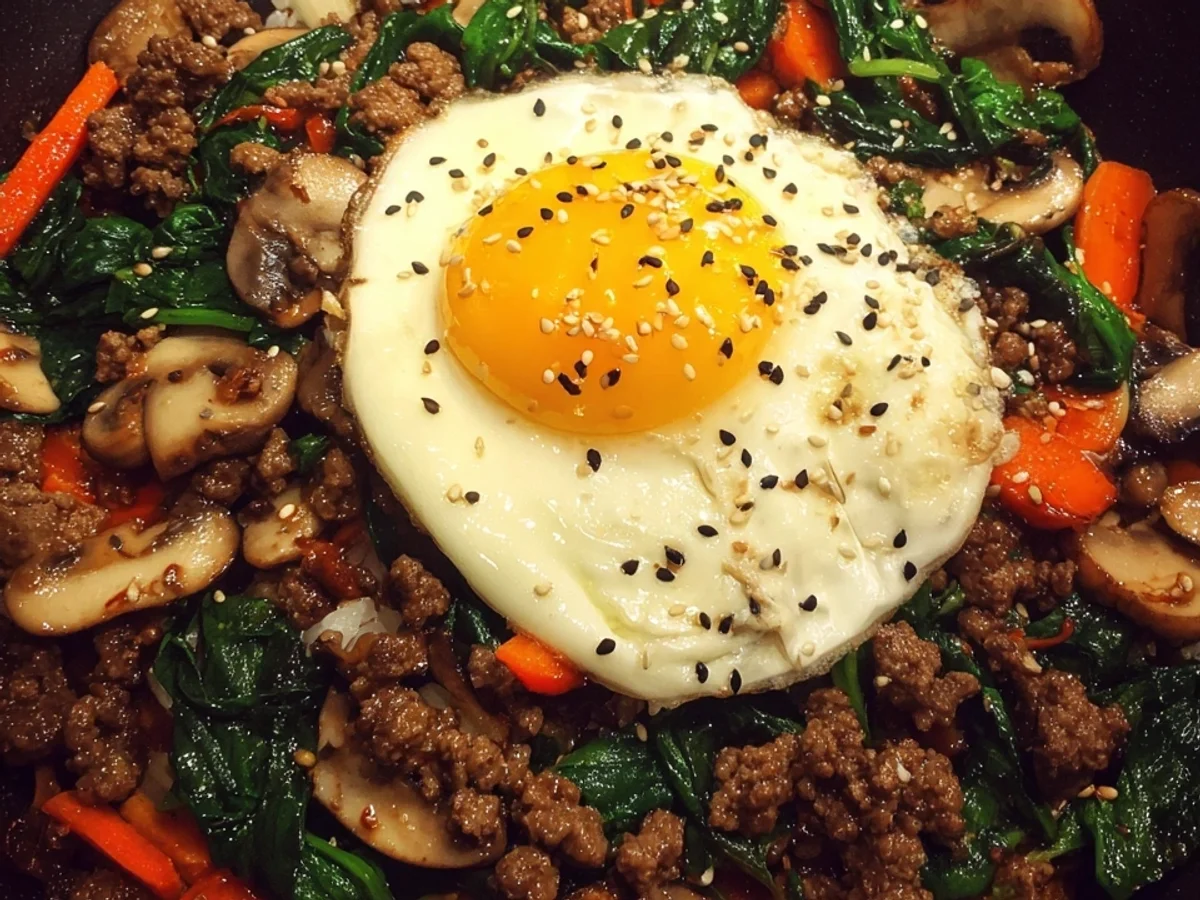


You know how sometimes you just crave something epic, but life's like, 'nope, not today, you've got five minutes'? That's how my journey with this Shortcut Bibimbap began. I was dreaming of those vibrant, comforting bowls from my favorite Korean spot, but my schedule was a disaster. I knew there had to be a way to capture all that flavor and warmth without a million tiny banchan bowls or hours of prep. This recipe? It's my weeknight miracle, honest. It brings all the joy of bibimbap right into one skillet, fast.
Oh, the first time I tried to make any bibimbap, I swear I used half my kitchen! I had little bowls of seasoned carrots, spinach, zucchini, mushrooms... it was a beautiful spread, but the dishes afterward? A mountain! My husband just stared, like, 'Are we opening a restaurant?' That's when I knew, for my sanity, a simplified, one-pan approach was the only way to go.
Ingredients for Your Easy Shortcut Bibimbap
- 1 lb lean ground beef (90/10): I go for lean ground beef here because we're adding so much flavor with the sauce and veggies, we don't need extra grease. Plus, it browns up beautifully, creating those lovely crispy bits that are just chef's kiss. If you're not a beef person, ground turkey or even crumbled firm tofu would work, but the beef really holds its own against the bold gochujang.
- 1/2 yellow onion, diced: Onions are the unsung heroes, right? They lay down that sweet, savory foundation for everything else. When they soften and become translucent, they release so much flavor, mingling with the garlic and ginger. It's like building the perfect stage for all our other ingredients to shine. Don't dice too big, we want them to melt into the dish.
- 3 cloves garlic, minced: You know me, I measure garlic with my heart! Three cloves is a good start, but if you're a garlic fiend like me, go for more! That pungent, aromatic kick is essential for balancing the richness of the beef and the spice of the gochujang. It just sings with the ginger and sesame oil, making our Shortcut Bibimbap so incredibly fragrant.
- 1 tbsp fresh ginger, grated: Fresh ginger is non-negotiable for me in Korean dishes. That warm, slightly spicy, citrusy zing it brings? It's magic! It really brightens up the whole dish and adds a layer of depth you just can't get from dried. Grate it fine so it disperses evenly and you get a burst of flavor in every bite. Trust me on this one!
- 2 tbsp gochujang (Korean chili paste): This is the star of the show, folks! Gochujang is a fermented chili paste that's spicy, savory, and has this incredible underlying sweetness. It's what gives our bibimbap that signature vibrant red hue and its irresistible kick. Don't be scared of the 'chili' part, it's more flavorful than just heat. It binds all the components together beautifully.
How to Make Shortcut Bibimbap: Step-by-Step Guide
- Step 1: Make Gochujang Sauce:
- Okay, first things first, let's get that sauce ready! In a small bowl, whisk together your gochujang, a splash of sesame oil, a touch of honey or sugar, and a bit of water to thin it out. This step is super quick, but it's crucial for getting that perfect sweet, spicy, savory balance for our Shortcut Bibimbap. Taste it, adjust it make it yours! It's going to coat everything in deliciousness.
- Step 2: Brown Beef & Aromatics:
- Time to get cooking! Heat up your skillet with a little sesame oil, then toss in that ground beef. Break it up and let it get nice and brown. Once it's almost done, drain any excess fat (we used lean, so there shouldn't be much!). Then, add your diced onion, minced garlic, and grated ginger. Sauté until fragrant and the onions are soft. Oh, the smell in your kitchen right now, amazing!
- Step 3: Sauté Veggies:
- Now for the color! Push the beef mixture to one side of the skillet. On the other side, add your julienned carrots, sliced mushrooms, and zucchini. You want to cook them until they're tender-crisp not mushy! This keeps the textures interesting in our Shortcut Bibimbap. It's all about building layers of flavor and visual appeal in that one pan. Don't overcrowd the skillet, work in batches if you need to!
- Step 4: Simmer & Combine:
- Once the veggies are just right, toss in your fresh spinach. It'll wilt down super fast, don't worry! Then, pour that incredible gochujang sauce you made earlier all over the beef and veggies. Stir everything together gently, making sure every single piece gets coated in that glorious, vibrant sauce. Let it simmer for just a couple of minutes to let all those flavors meld. This is where the magic of this Shortcut Bibimbap really happens!
- Step 5: Cook Eggs:
- While your beef and veggies are simmering, quickly fry up some sunny-side-up eggs. A slightly runny yolk is traditional for bibimbap, creating a rich, creamy sauce when mixed in. If you prefer, a fried egg with a firmer yolk or even a soft-boiled egg works great too! Just make sure they're ready to go when your skillet is done.
- Step 6: Serve Bibimbap:
- Alright, time to eat! Divide your fluffy steamed rice into bowls. Spoon generous amounts of your saucy ground beef and veggie mixture over the rice. Top each bowl with a beautifully fried egg. A sprinkle of sesame seeds and a drizzle of extra sesame oil wouldn't hurt, either! Get ready to mix it all up in your bowl for the ultimate bite. Enjoy your homemade Shortcut Bibimbap!
Honestly, cooking this dish is such a joy. It's fast-paced but satisfying, a real kitchen dance! Seeing all those vibrant colors come together in one pan, smelling the garlic, ginger, and sesame oil... it's just pure happiness. And that moment when the spinach wilts down, and the sauce coats everything? That's when you know you're making something truly special.
Storing Leftovers of Your Shortcut Bibimbap
Okay, so you've got leftovers of your amazing Shortcut Bibimbap? Lucky you! Store the beef and veggie mixture in an airtight container in the fridge for up to 3-4 days. I usually keep the rice separate, as it can get a bit hard in the fridge. When reheating, I like to warm the mixture gently on the stovetop or in the microwave. Reheat the rice separately, too, or even make fresh if you have time. My biggest oops? Leaving the egg on top when storing it just doesn't reheat well and gets rubbery. Always fry a fresh egg for leftovers!

Swapping Ingredients for Your Shortcut Bibimbap
This Shortcut Bibimbap recipe is super forgiving for substitutions, which I love! No cremini mushrooms? White button or even shiitake would be fantastic. Out of zucchini? Bell peppers (any color!) or even some finely chopped broccoli florets would work. If you're not a beef person, ground turkey, chicken, or even a plant-based crumble would be great. Just be sure to season them well! And for the spice-averse, you can reduce the gochujang and add a little extra soy sauce or honey to taste. I've even swapped out carrots for thinly sliced daikon radish sometimes!
Serving Up Your Delicious Shortcut Bibimbap
Serving up this beauty is all about presentation and personalization! Of course, a perfectly fried egg with a runny yolk is non-negotiable for me. But don't stop there! A sprinkle of toasted sesame seeds adds a lovely crunch and extra nutty flavor. For a little fresh kick, a few slices of green onion or a handful of fresh cilantro on top are wonderful. Sometimes, I'll even add a drizzle of extra gochujang sauce for those who like it extra spicy. And if you're feeling fancy, some kimchi on the side is always a welcome addition, bringing that tangy, fermented goodness to balance the rich flavors.
The Story Behind Shortcut Bibimbap
Bibimbap, meaning 'mixed rice,' is a cornerstone of Korean cuisine, a dish steeped in history and tradition. Originally, it was a way to use up leftover side dishes at the end of the lunar new year, mixing everything together with rice for a hearty meal. Over time, it evolved into the vibrant, artfully arranged dish we know today, often served in a hot stone bowl (dolsot bibimbap) for that crispy rice crust. While our version is a quick, one-skillet take, the spirit of combining fresh ingredients, savory meat, and a spicy-sweet sauce over rice remains true to its roots. It's a comforting dish, no matter how you make it.
And there you have it, friends! My go-to recipe for those busy weeknights when you crave something incredibly satisfying and packed with flavor. This dish has saved me from countless takeout orders and brought so much joy to my kitchen. I hope you love making and eating this as much as I do. What are your favorite quick weeknight meals? Share your thoughts in the comments below!

FAQs About Making Shortcut Bibimbap
- Can I make this Shortcut Bibimbap vegetarian?
Absolutely! Swap the ground beef for crumbled firm tofu or a plant-based ground. You might want to add a splash of soy sauce or vegetarian oyster sauce to the tofu for extra umami as it cooks. It'll be just as delicious, I promise!
- What kind of rice should I use for bibimbap?
Short-grain white rice is traditional for bibimbap because it's slightly sticky and holds up well when mixed. However, honestly, any cooked rice works! I've used jasmine rice and even brown rice in a pinch, and it was still fantastic.
- Is gochujang very spicy?
Gochujang has a lovely kick, but it's not usually blow-your-head-off hot. It also has a wonderful savory sweetness. If you're sensitive to spice, start with 1 tablespoon and add more to taste. You can always add a little extra honey to temper the heat, too!
- Can I prep any of this in advance?
Yes! You can definitely dice your onion, mince garlic, grate ginger, and julienne your carrots and zucchini a day ahead. Store them in airtight containers in the fridge. You can also mix the gochujang sauce beforehand. It makes cooking even faster!
- What if I don't have all the veggies listed?
No worries at all! This recipe is super flexible. Use what you have! Bell peppers, snap peas, green beans, or even cabbage would be great additions or substitutions. The key is to get a good mix of colors and textures, so don't be afraid to experiment!